

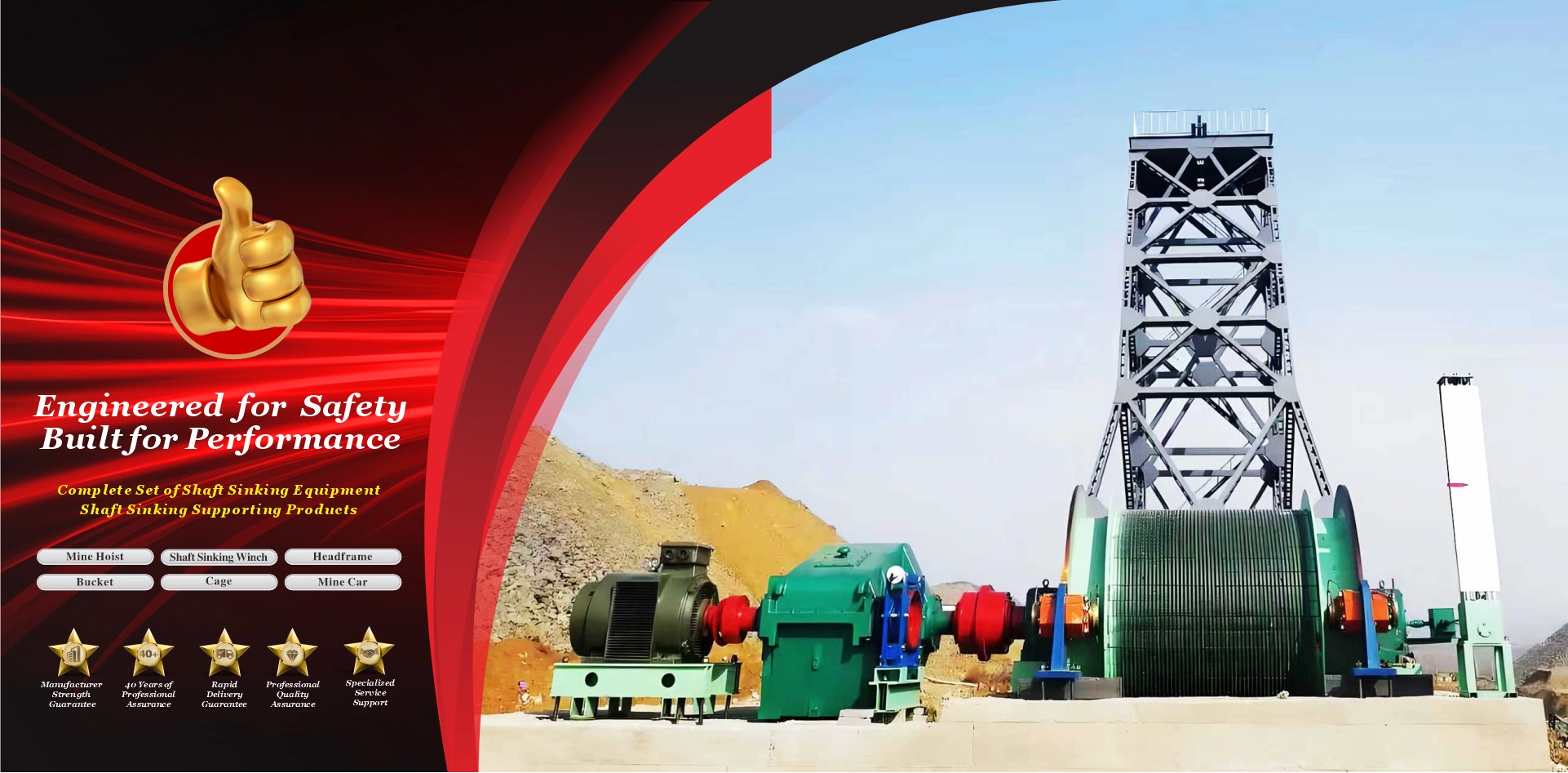
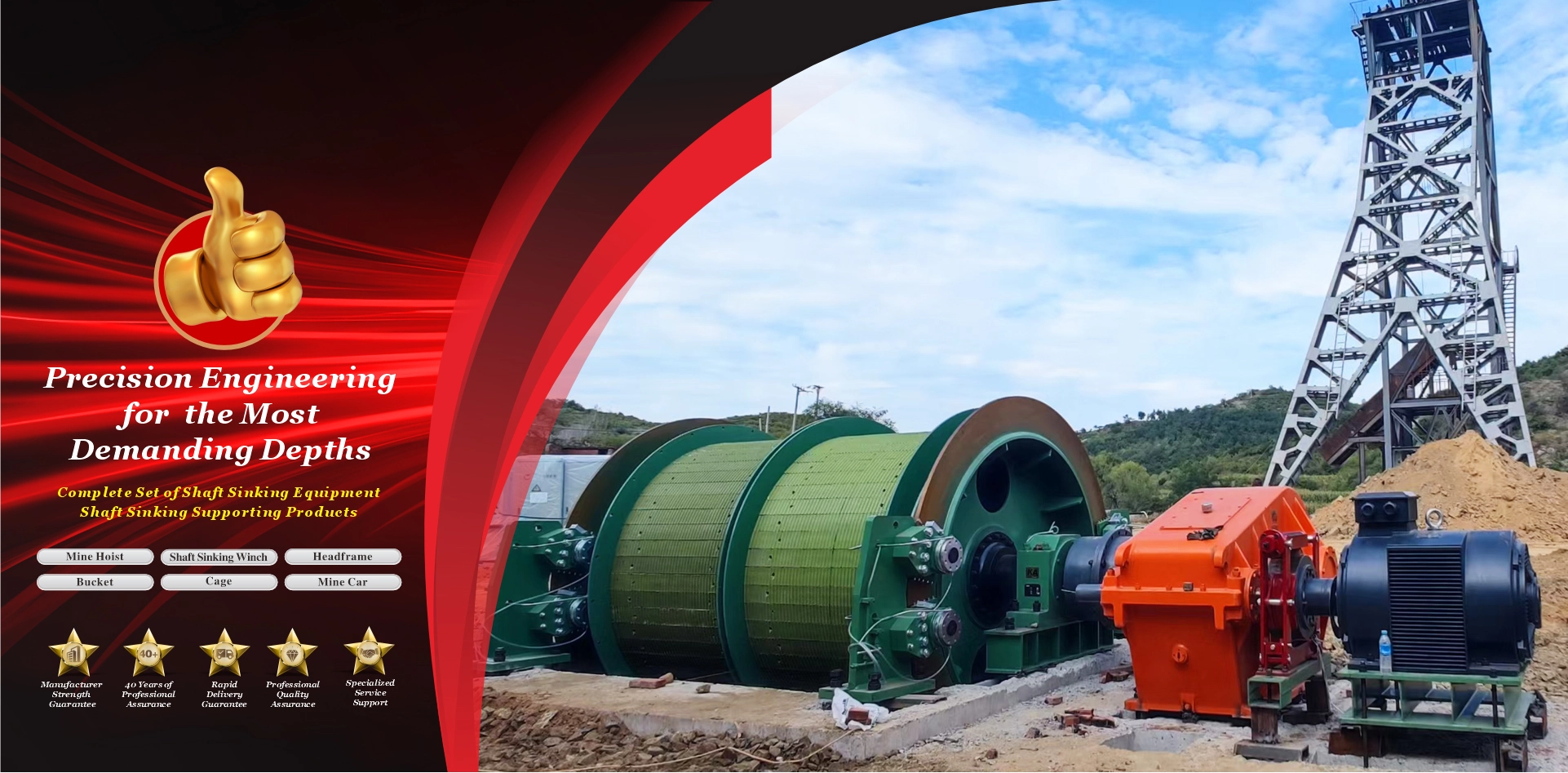
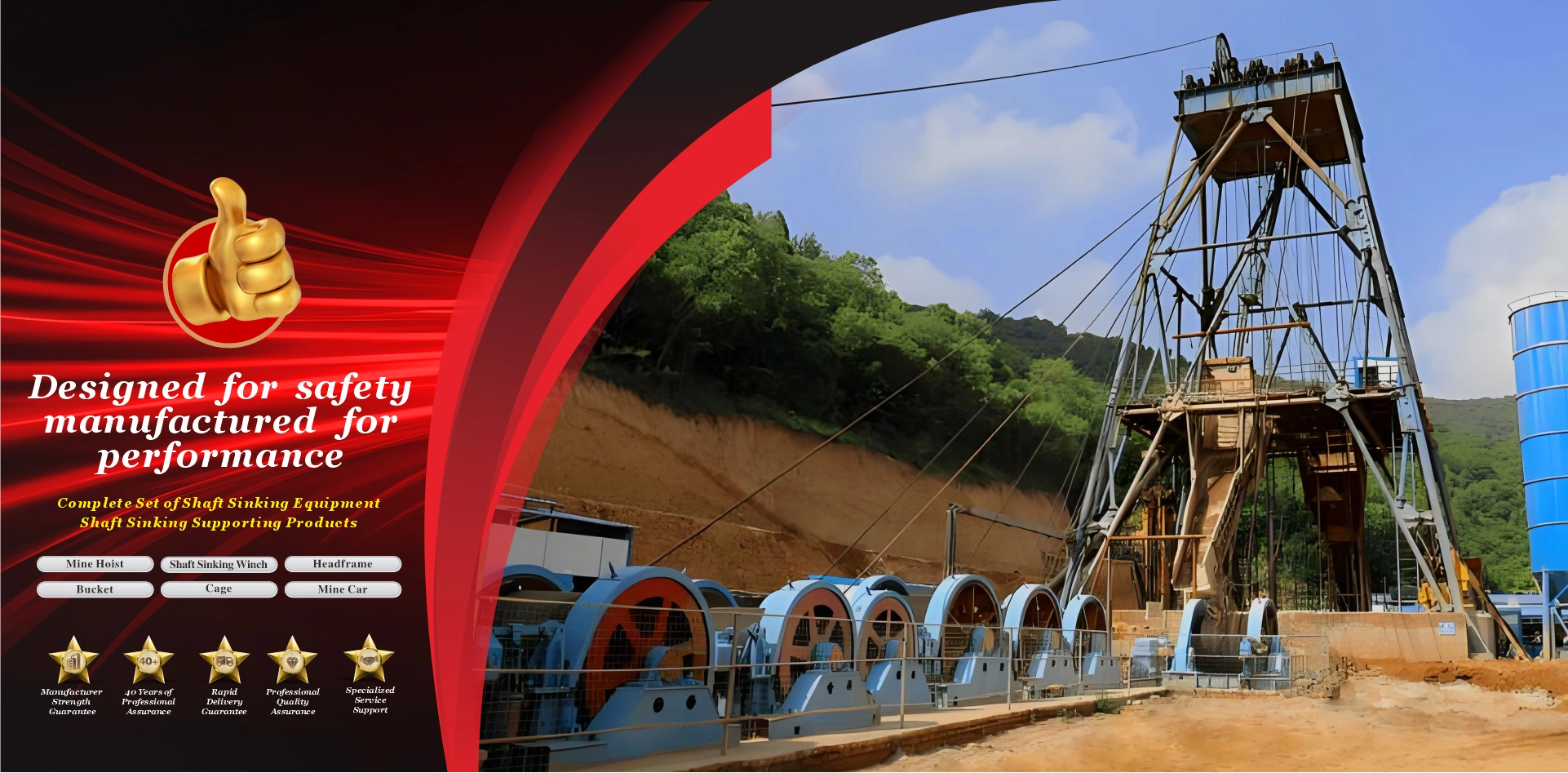
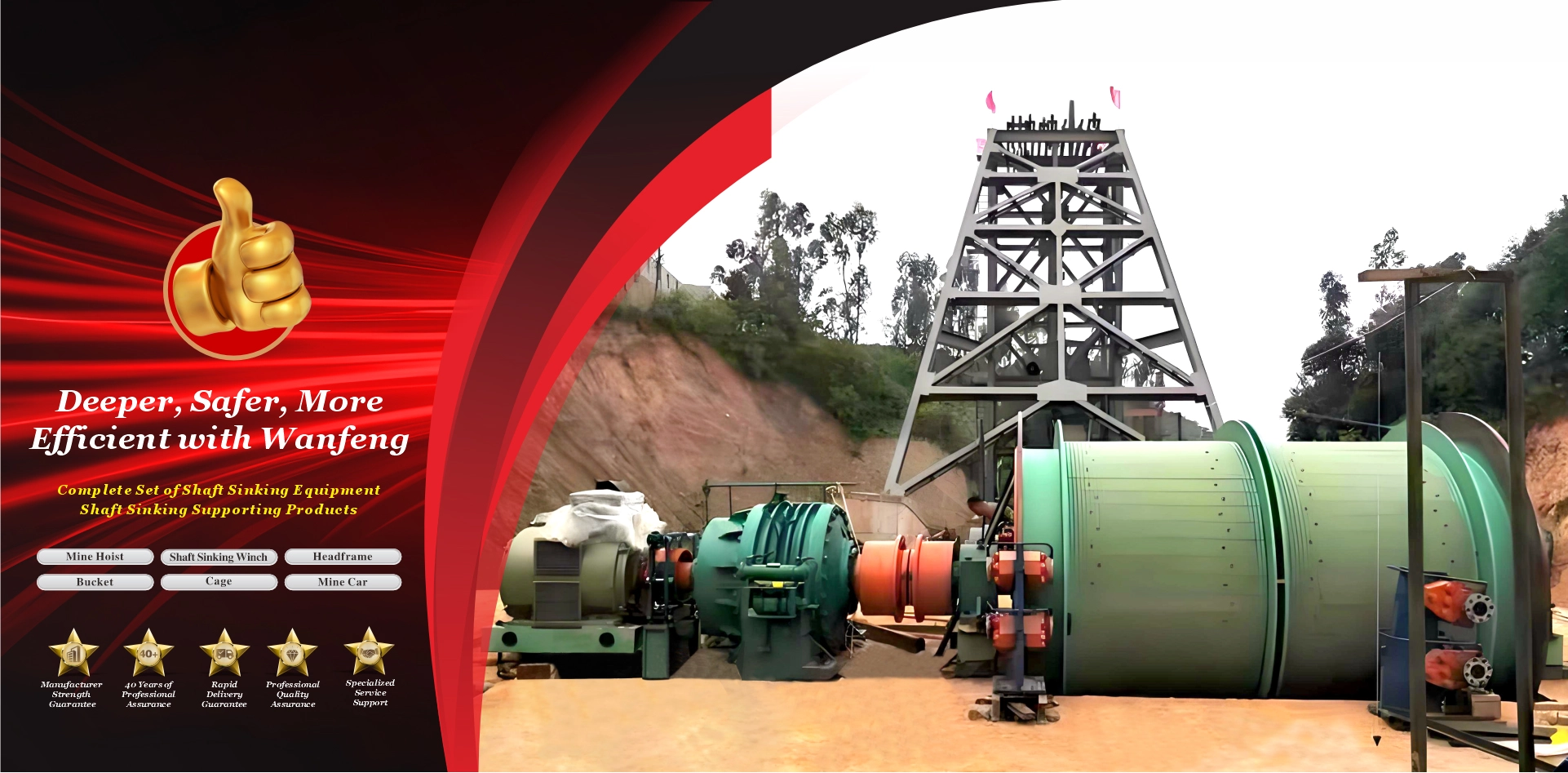
Lifting capacity: 1-4.5tons; Lifting height: 0-750m; Lifting speed: 1.0-4.1m/s.
VIEW MORE
Lifting capacity: 1-4.5tons; Lifting height: 0-750m;Lifting speed: 1.0-4.1m/s.
VIEW MORE
Lifting capacity: 1-4.5tons; Lifting height: 0-750m; Lifting speed: 1.0-4.1m/s.
VIEW MORE
Lifting capacity: 1-4.5tons; Lifting height: 0-800m; Lifting speed: 1.6-4.1m/s.
VIEW MORE
Lifting capacity: 1-4.5tons; Lifting height: 0-800m; Lifting speed: 1.6-4.1m/s.
VIEW MORE
Lifting capacity: 1-4.5tons; Lifting height: 0-800m; Lifting speed: 1.6-4.1m/s.
VIEW MORE
Lifting capacity: 6-35tons; Lifting height: 0-2300m; Lifting speed: 7.0-14.0m/s.
VIEW MORE
Lifting capacity: 6-50tons; Lifting height: 0-1600m; Lifting speed: 7.0-14.0m/s.
VIEW MORE
Hebi Wanfeng Mining Machinery Manufacturing Co., Ltd. was established in 1985, with forty years of dedication to the manufacturing of mining equipment. The company specializes in hoists, winches, shaft sinking winches, and supporting mining equipment. Certified with ISO9001 and CE, it is located in Hebi City, Henan Province, covering a total area of 130,000 square meters and boasting assets exceeding 470 million yuan. It is a comprehensive machinery manufacturing enterprise integrating R&D, manufacturing, sales, and service. With a service network spanning both domestic and international markets, the company is committed to providing smarter, safer, and more efficient integrated solutions for the global mining industry, contributing to the high-quality development of the mining sector.
VIEW MORE


Mine hoists winch are specialized lifting equipment used for transporting ore, personnel, equipment, and materials in vertical or inclined shafts. Their safety and reliability directly affect the production efficiency of mines and the safety of personnel.
Working principles of mine hoists winch:
◎ The steel rope is directly wound around the drum, and the ascent and descent of the conveyance are achieved through the forward and reverse rotation of the drum.
◎ The steel rope is placed over the drive sheave (friction pulley), with one end connected to the conveyance and the other to the balancing tail rope. The movement of the steel rope is driven by the friction between the rope and the lining of the drive sheave.

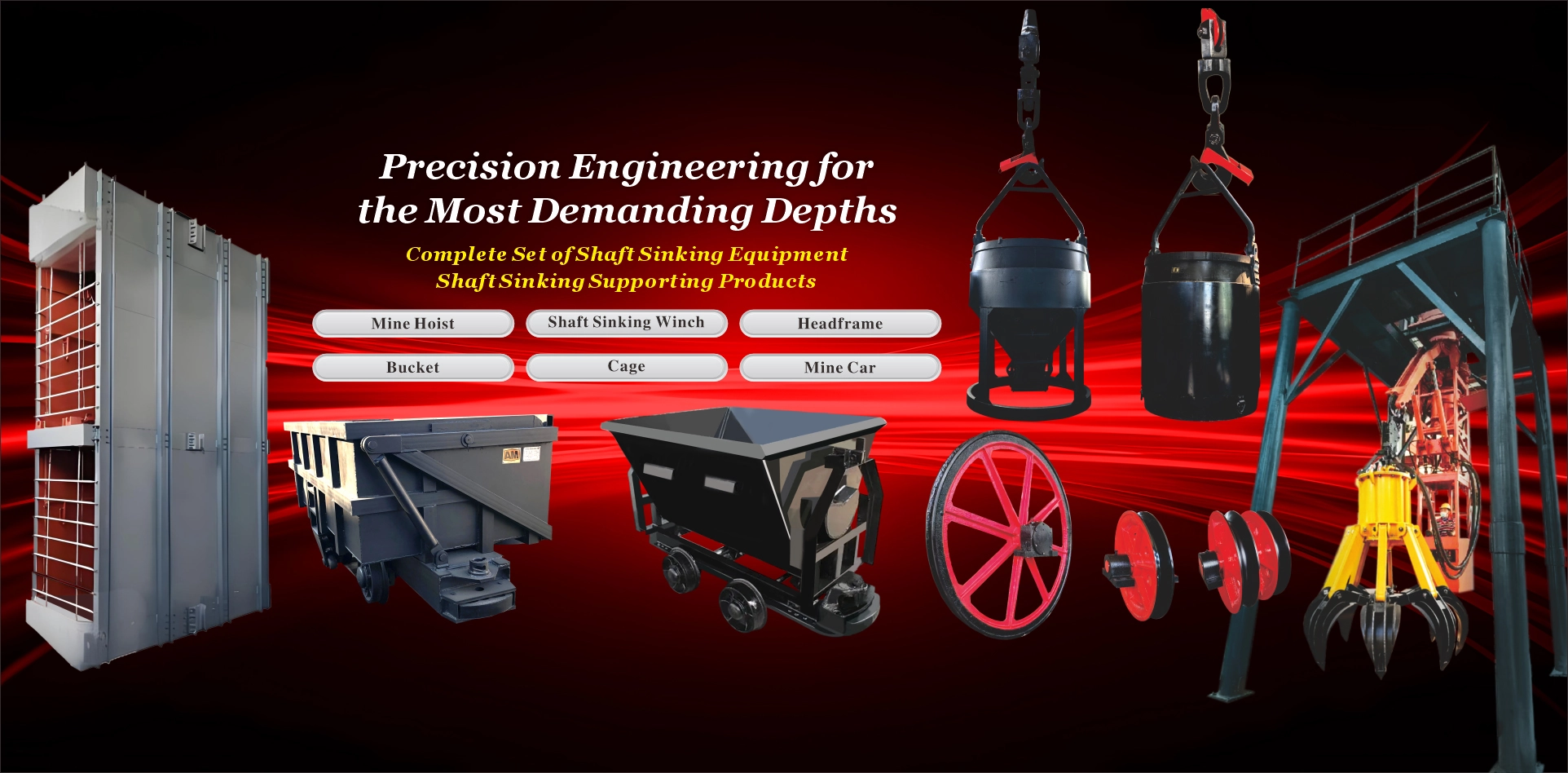
Mine sinking winch, also known as a steady winch, is a specialized engineering equipment used during the mine construction (shaft sinking) phase. Its core function is not to hoist ore but to perform heavy-duty suspension, precise lifting and lowering, and traction operations during the excavation of vertical or inclined shafts, providing support for shaft sinking operations.


Mine headframe is a tower-type steel structure erected above the ground shaft collar, designed to support the head sheave, bear all hoisting loads, guide hoisting containers in and out of the shaft, and house related auxiliary facilities.

Mine car is a railway vehicle used in mines for transporting ore, waste rock (gangue), materials, and personnel on tracks. It connects the underground working face, the shaft bottom station, and the surface industrial yard, and its turnover efficiency directly impacts the overall production capacity of the mine.

◎ Multi-rope friction hoists represent the high-end and cutting-edge of modern mine hoisting technology. They perfectly address the core demands of deep-shaft, heavy-load, high-efficiency, and safe hoisting.
◎ The core of permanent magnet mine hoists lies in the use of low-speed, high-torque permanent magnet synchronous motors to directly drive the drum or friction wheel on the structure of traditional hoists, thereby eliminating complex mechanical transmission components such as traditional gear reducers, couplings, and high-speed motors.

Mine Hoist Accessories, Mine Sinking Winch Accessories,Disc Brakes, Hydraulic Stations, Mine Inclined Shaft Runaway Prevention Devices, Head Sheaves, Gear Reducers, Motors, Dial-type Depth Indicators, etc.

Mining belt conveyor, officially known as a mining belt conveyor, is a core piece of equipment in mines used for the continuous, efficient, and long-distance transportation of bulk materials (such as coal, ore, and waste rock). From underground working faces to surface coal preparation plants, it almost traverses the entire logistics chain of mine production.


The Exhibition
Factory Tour for International Clients
Successful Case


